Why Does Spilled Milk Smell Stay in a Vehicle in North Carolina?
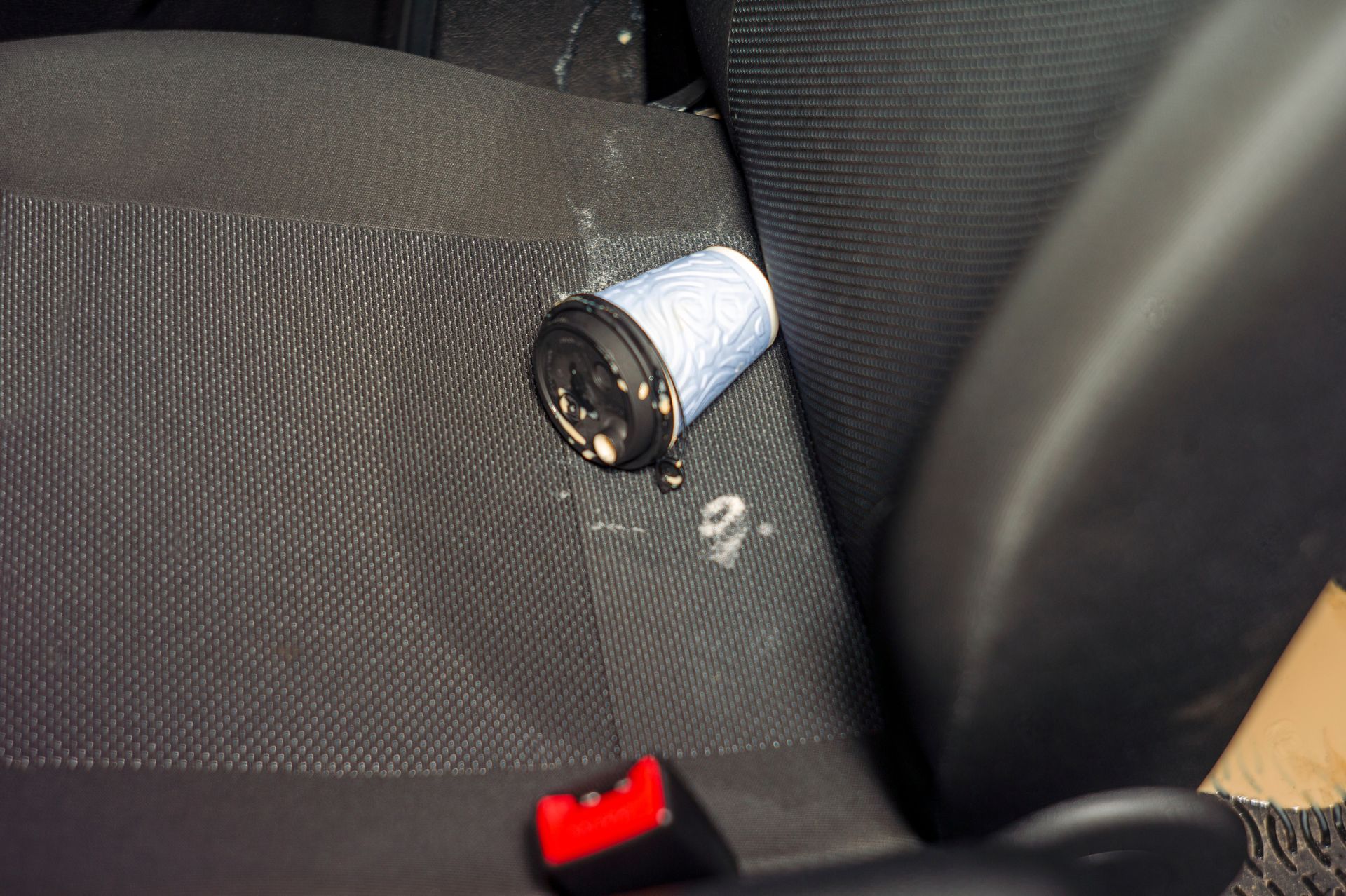
Spilled milk can continue smelling inside a vehicle because the liquid travels beneath the visible surface into carpet backing, padding, seat foam, seams, trim and floor channels.
This problem occurs in family vehicles, work trucks, rideshare vehicles and rental fleets throughout North Carolina, including Raleigh and the Triangle, Charlotte/Lake Norman, Mooresville, the Piedmont Triad and Western North Carolina.
Surface wiping may remove what can be seen while leaving physical residue underneath. Successful vehicle odor removal requires locating the complete spill, removing accessible contamination, cleaning compatible materials and drying the vehicle thoroughly.
Fragrance or air treatment cannot extract milk from carpet padding or seat foam.
A Common Raleigh Vehicle-Odor Situation
Consider a Raleigh driver who discovers that a milk container leaked onto the rear floor during a hot weekend.
The visible carpet is cleaned, but the odor returns whenever the closed vehicle heats up. Possible reservoirs include:
- Carpet backing
- Under-carpet padding
- Seat tracks
- Rear-seat foam
- Floor seams
- Plastic trim edges
- A removable floor mat
- The area beneath a child seat
- Items stored in the vehicle
- Liquid that traveled toward the cargo area
The strongest-smelling surface may not contain the deepest part of the spill.
Why the Problem Is Not Limited to Raleigh
The same problem can occur throughout North Carolina.
A Charlotte rideshare vehicle may develop odor beneath the rear seat. A Mooresville family vehicle may have liquid trapped beneath a rubber floor mat. A Greensboro work truck may remain closed all weekend. An Asheville vacation vehicle may sit unused while damp carpet and foam hold the spill.
Raleigh remains a priority market for No Scents, but the investigation should always follow the affected materials—not simply the city or the strength of the odor.
Why Vehicle Heat Makes Odor More Noticeable
A closed vehicle can become much warmer than the surrounding air. Higher temperatures can make residual odor more noticeable inside the cabin.
North Carolina humidity may also slow the drying of carpet, foam and padding when moisture is trapped beneath trim or seating.
Odor that becomes stronger during the afternoon does not prove the entire vehicle is contaminated. It suggests that the original spill location, material depth and temperature pattern should be investigated.
Follow the Liquid, Not Just the Smell
Liquid may move:
- Through the carpet face
- Into carpet backing and padding
- Along floor contours
- Beneath plastic trim
- Around seat anchors
- Through upholstery seams
- Into perforated seating material
- Beneath a cargo liner
- Under removable storage compartments
The spill may have moved while the vehicle was accelerating, braking, turning or parked on a slope.
Record where the container was located and how the vehicle was positioned before cleaning or disassembly begins.
Vehicle Materials Require Careful Treatment
Vehicle interiors may contain:
- Synthetic carpet
- Foam-backed carpet
- Cloth upholstery
- Leather or coated leather
- Vinyl
- Headliner fabric
- Seat foam
- Adhesive
- Electronic wiring
- Airbag components
- Sensors
- Heating and ventilation equipment
A product suitable for household carpet may not be suitable for a vehicle seat, headliner, leather coating, electrical connection or airbag component.
Do not remove powered seats or electrical components without the appropriate automotive knowledge.
Source Removal Comes Before Air Treatment
A source-first process may include:
- Removing the leaking container and contaminated contents
- Inspecting removable floor mats
- Mapping the likely travel path
- Extracting recoverable moisture
- Cleaning compatible carpet and upholstery
- Accessing padding or foam when justified
- Removing unsalvageable material
- Rinsing away appropriate cleaning residue
- Drying every retained layer
- Rechecking the vehicle after it has been closed
- Evaluating remaining odor reservoirs
- Considering professional residual treatment only after physical cleaning
Ventilation may temporarily reduce the odor inside the cabin. It cannot remove milk residue from seat foam or carpet padding.
Child Seats Require Manufacturer Guidance
If milk reached a child-restraint system:
- Consult the seat manufacturer’s instructions.
- Do not soak straps unless specifically permitted.
- Do not apply unapproved solvents, disinfectants or deodorizers.
- Do not alter foam, buckles or restraint components.
- Contact the manufacturer when cleaning limits are unclear.
Vehicle odor removal should never compromise safety equipment.
Where Chlorine Dioxide May Fit
Chlorine dioxide is not the first response to a milk spill.
It cannot:
- Extract liquid from carpet
- Remove food residue from padding
- Clean seat foam
- Dry a vehicle
- Replace contaminated material
- Repair electronics
- Establish that a child seat is safe
- Correct an active spill
- Replace vehicle-manufacturer instructions
Professionally controlled treatment may be evaluated for an appropriate residual odor only after the physical spill has been located, cleaned and dried.
Gas-phase chlorine-dioxide treatment requires an unoccupied, controlled treatment area. People, pets and plants must remain outside. Appropriate ventilation and professional clearance are required before re-entry.
Never activate loose tablets inside a vehicle or mix chlorine dioxide with bleach, acids, ammonia, enzymes, upholstery products or other chemicals.
Practical Steps for North Carolina Vehicle Owners
- Remove the leaking container and affected loose items.
- Photograph the spill location.
- Record when the spill occurred.
- Blot recoverable liquid with plain white absorbent material.
- Remove and inspect compatible floor mats.
- Check beneath nearby loose contents.
- Note whether the vehicle was parked on a slope.
- Follow vehicle and upholstery manufacturer instructions.
- Avoid saturating electrical or safety components.
- Save labels from products already applied.
- Arrange extraction when liquid reached padding or seat foam.
- Dry retained materials completely.
- Recheck the vehicle after it has been closed.
- Evaluate residual treatment only after source removal.
What Not to Do
Avoid:
- Covering the odor with fragrance
- Pouring detergent over the spill
- Saturating seat foam
- Applying bleach
- Mixing cleaning products
- Applying products through perforated seats
- Soaking child-seat straps
- Removing powered seats without qualification
- Spraying deodorizer into ventilation openings
- Closing the vehicle while materials remain wet
- Operating ozone in an occupied vehicle
- Activating chlorine-dioxide tablets inside the vehicle
- Treating the cabin air while residue remains in the padding
- Assuming odor disappearance proves the source is gone
- Promising permanent results without inspecting the materials
North Carolina Conditions That Affect Vehicle Odor
Vehicle odor problems in Raleigh, Cary, Apex, Morrisville, Charlotte, Mooresville, Greensboro, Winston-Salem, Asheville and Hendersonville can become more noticeable because of:
- Hot parked vehicles
- Humid weather
- Long commutes
- Rideshare use
- Family travel
- Grocery deliveries
- Work trucks
- Rental vehicles
- Vehicles left closed over a weekend
- Moisture trapped beneath rubber floor mats
No Scents investigates the affected material and depth before recommending treatment. The correct process should not be selected from the odor description alone.
When Professional Help Is Appropriate
Contact an automotive technician, upholstery specialist or vehicle manufacturer when:
- Powered seating must be removed
- Airbag or restraint components are involved
- Liquid reached electronics
- Interior trim must be disassembled
- Material-cleaning instructions are unclear
Contact No Scents when:
- The visible spill has been cleaned but odor remains
- Carpet padding or seat foam may be affected
- The strongest reservoir is unclear
- Several vehicle areas require comparison
- Previous fragrance or cleaning products complicate diagnosis
- Physical source removal needs evaluation
- Controlled professional residual treatment may be appropriate
Frequently Asked Questions
Why does milk odor return when the vehicle gets hot?
Heat can make residual odor more noticeable. Milk may also remain in carpet backing, padding, foam or seams that were not cleaned completely.
Can baking soda remove spoiled-milk odor?
It may temporarily absorb some accessible moisture or odor, but it cannot extract food residue from carpet padding and seat foam.
Does the vehicle carpet need to be removed?
Not always. The decision depends on how much liquid spilled, where it traveled, accessibility, material condition and whether the affected layers can be cleaned and dried.
Can an air purifier remove vehicle odor?
An air cleaner may reduce some airborne material, depending on its design. It cannot remove milk from seat foam or carpet padding.
Can I shampoo the entire vehicle?
Uncontrolled saturation can move contamination farther, wet electrical components and extend drying. The spill area and affected depth should be identified first.
Does No Scents provide vehicle odor service outside Raleigh?
No Scents evaluates odor problems across North Carolina service markets, including Raleigh and the Triangle, Charlotte/Lake Norman, Mooresville, the Piedmont Triad and Western North Carolina.
Get Professional Vehicle Odor Help Across North Carolina
No Scents traces vehicle odor through carpet, padding, seat foam, floor seams, cargo areas and previous cleaning products before recommending source removal or controlled residual treatment.
For vehicle, pet and difficult odor removal across North Carolina:
No Scents Advanced Odor Removal
Share Post
Recent Posts